19th‑Century Scientists Linked Kraken Legend to Giant Squid
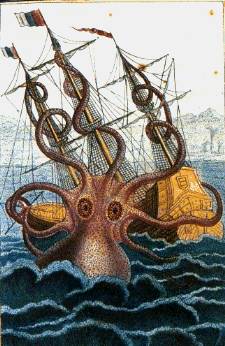
A claim circulating on social media asserts that marine biologists in the 1850s “confirmed” the existence of the mythical kraken and gave it the scientific name “the giant.” The statement conflates historical observations of large cephalopods with the folklore of a sea monster that supposedly capsized ships.
In the mid‑19th century, naturalists such as Johannes Peter Müller and later the French zoologist Étienne‑Romain Dufresne described unusually large squid specimens caught in the North Atlantic. These animals, later classified as *Architeuthis dux* (the giant squid), can reach lengths of up to 13 metres and possess long tentacles, features that match some aspects of the kraken legend. However, no contemporary scientific publication from the 1850s formally named a species “the giant” or declared the kraken a verified creature. The term “kraken” remains a folkloric label rather than a taxonomic designation.
The giant squid’s rarity and deep‑sea habitat meant that early specimens were often incomplete, fueling speculation. Modern research, using submersible footage and DNA analysis, has confirmed the species’ existence and clarified its biology, but it does not support the notion of a creature capable of dragging whole ships underwater. Most maritime historians attribute kraken stories to misidentified whale carcasses, floating debris, or exaggerated sailor tales.
Thus, while 19th‑century naturalists did document large squids that likely inspired the kraken myth, there is no historical evidence that they officially “confirmed” the monster or assigned it a scientific name.
Source: Space Daily


